
Estate planning works best when one coordinates a variety of relevant factors (e.g., legal documents, beneficiary designations, tax strategy, etc.).
Important: We do not provide legal advice and recommend seeking such advice from a qualified attorney or legal firm.
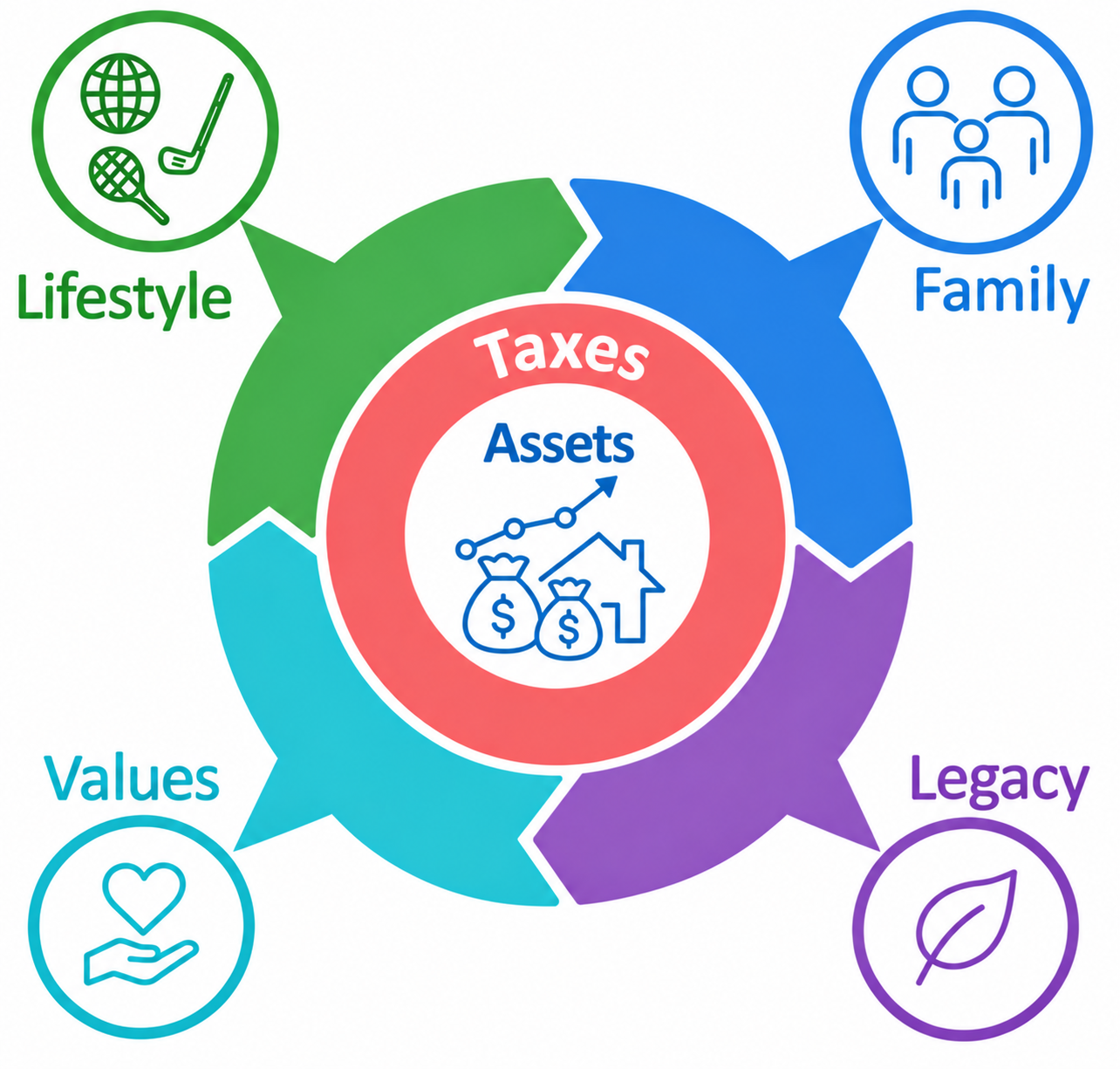
4 KEY ASPECTS OF ESTATE PLANNING
Estate planning means different things to different people. While there is no universal definition of estate planning, we highlight four primary categories:
Your financial security
Make sure that your assets will support you throughout your lifetime, including potential periods with increased care needs.
Your health & medical decisions
Specify who can make healthcare decisions for you and document your wishes if you are unable to communicate them yourself.
Legacy
Determine who gets what, as well as when and how. This includes family and friends, but also charitable giving strategies.
Taxes
Coordinating strategies for estate taxes with those for ordinary income and capital gains can help you grow and preserve more wealth.
IMPORTANT QUESTIONS TO ASK
THE BIG QUESTION
If something happened to you tomorrow, would your estate plan take care of your loved ones? In addition to ensuring their financial security, it is also important to minimize the administrative burden they will face.
THE BIG QUESTION
If something happened to you tomorrow, would your estate plan take care of your loved ones? In addition to ensuring their financial security, it is also important to minimize the administrative burden they will face.
Do you have an estate plan? If so, when was it last updated?
We regularly encounter families with little or no estate planning in place. Even when we see estate plans, many do not align with current goals, family structure, etc.
Are the people and entities named in your estate plan current?
It is important to ensure that all of the people and entities names in your estate plan (personal representative, beneficiaries, trustees, attorneys in fact, etc.) are up to date and reflect your current wishes.
Have life changes been reflected within your estate plan?
Whether it is birth/death, marriage/divorce, work/business, or something else, it is important that your estate plan is up to date. We have seen and regularly read about estate planning horror stories. Sometimes people accidentally leave their ex-spouses as beneficiaries on old 401K accounts. Other times people forget to update their estate plans to reflect new family members.
Could asset growth alter your approach to estate planning?
Many people who have significantly more than they need are starting to lean toward sharing more assets with children, heirs, and charities during their lifetimes.
Have you coordinated all aspects of your estate plan?
Estate planning is not limited to the legal documents an attorney prepares for you. For example, it is important to coordinate estate planning with strategies for titling assets and designating beneficiaries. For example, we find disclaiming strategies can provide significant flexibility and benefits for little to no cost, but beneficiary designations are not always set up in a manner to accommodate this.
Is your estate plan tax efficient?
Estate planning should consider tax efficiency both within and between estates (i.e., wealth transfer). Whether one is using beneficiary designations and a living trust to leave assets to their children, or leveraging more advanced trust strategies for multiple generations, it is important to optimize taxes across multiple dimensions of your estate.
Estate planning requires coordination
Legal documents
- Living will
- Living/revocable trusts
- Irrevocable trusts
- Powers of attorney
- Healthcare directives
- Last will & testament
Financial plan
- Brokerage accounts
- Retirement accounts
- Insurance/annuities
- Real estate
- Beneficiary designations
- Charitable giving
Courtesy planning review
Make sure your planning aligns with your intentions.